Crypto tax in Australia: how CGT on crypto works
15 June 2026 · Metrifly team · Updated 21 June 2026
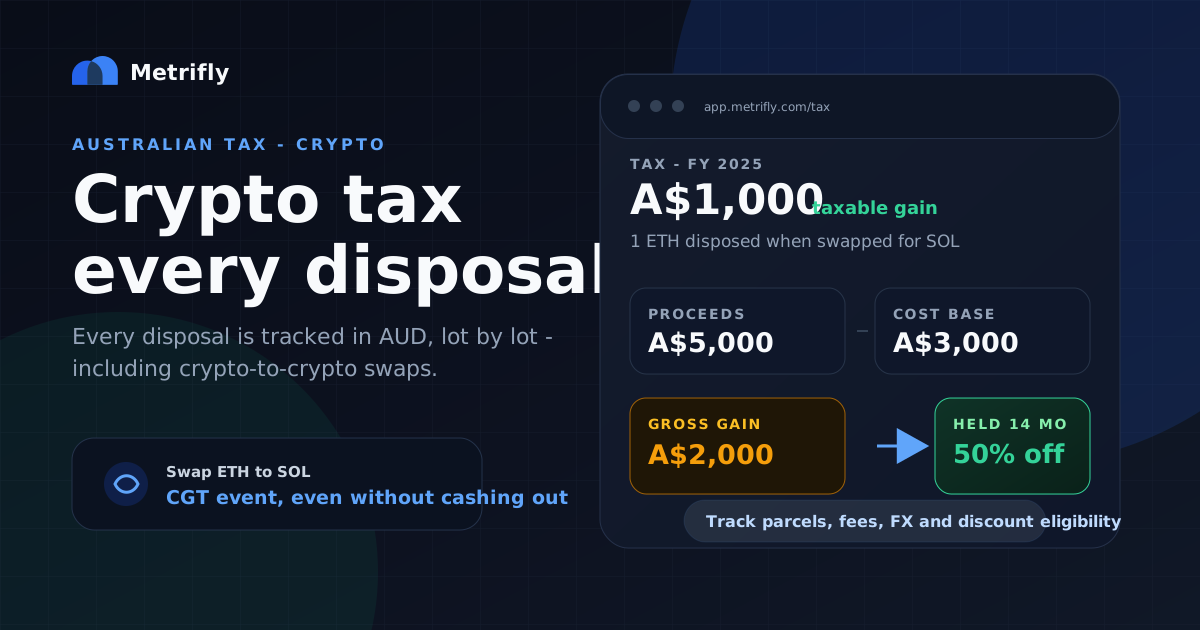
The ATO treats most crypto as a capital gains tax asset, not as currency — which surprises people who assume tax only applies when they cash out to Australian dollars. Every disposal is a CGT event, including swapping one coin for another.
This is general information, not tax advice. Check your own situation with a registered tax agent or the ATO.
Crypto is a CGT asset
For most investors, crypto is held on capital account, so the capital gains tax rules apply. Tax is triggered by a disposal — and there are more disposals than people expect:
Easy to overlook: a crypto-to-crypto trade is a CGT event even though no Australian dollars changed hands. You work out the gain in AUD using the market value at the time of the swap.
Calculating the gain — and the 50% discount
The gain is the same formula as for shares:
capital gain = proceeds (AUD value at disposal) − cost base
The cost base includes what you paid plus acquisition costs such as exchange or network fees. The 50% CGT discount then applies in the same way: individuals and trusts who held the crypto for more than 12 months are taxed on only half the gain. Held 12 months or less, the whole gain is taxable. See capital gains tax on shares for the mechanics — they carry straight over to crypto.
Capital losses on crypto offset capital gains (including gains on shares) and carry forward — applied before the 50% discount.
A quick example
You buy 1 ETH for A$3,000 (including fees), hold it 14 months, then swap it for SOL when the ETH is worth A$5,000. That swap is a disposal: a A$2,000 gross gain. Because you held more than 12 months, the discount halves it to a A$1,000 taxable gain, added to your income for the year. Your new SOL starts with a A$5,000 cost base for the next disposal.
When crypto is income, not CGT
Not everything is a capital gain. Some crypto is taxed as ordinary income at its AUD value when you receive it:
- Staking rewards and similar yield.
- Airdrops in many cases.
- Crypto received as payment for work.
That amount is income when received, and it also becomes the cost base for a later CGT event when you dispose of it. If you’re trading as a business rather than investing, different rules can apply again — worth professional advice.
Records to keep
Crypto record-keeping is harder than shares: many small transactions, multiple wallets and exchanges, and crypto-to-crypto swaps that each need an AUD value at the time. For every transaction, keep the date, the AUD value, what you received, and fees. The ATO receives data from Australian exchanges, so your records need to match.
FAQ
Do I pay tax if I only swap between coins and never cash out? Yes. Each crypto-to-crypto swap is a CGT event valued in AUD at the time of the swap, even with no AUD withdrawal.
Does moving crypto between my own wallets trigger tax? No. Transferring between wallets you control is not a disposal — but keep records so the movement isn’t mistaken for one.
How is the 50% discount applied with losses? Offset capital losses against gross gains first, then apply the 50% discount to the remaining long-term gain.
Track crypto with your shares
Metrifly tracks crypto alongside your shares in one AUD portfolio, with disposals and the 50% discount flowing into your capital gains and income reports. Estimate a single sale with the CGT calculator, and tidy everything before year-end with the EOFY checklist.